Thursday, April 30, 2020

The Women Who Changed the World


Elizabeth Cady Stanton

Susan B. Anthony


It's not easy to know how different the world was in the early 1800's. We think probably people looked a lot like us (they did) but next to impossible to know what their lives were like day-to-day, yet we tend to think they were pretty much like our own. They were not. There have been so many social revolutions, technological innovations, wars, upheavals--advances and retreats--that what we think of as progress, when examined, appears at times to be the opposite. This is why when we look at the actual thinking of the distant past, we wonder.

One change we cannot question is the position of women in society since the 19th century--and for the better. Despite the conflicts and catastrophes, the change for women has happened thanks in large part to Elizabeth Cady Stanton and Susan B. Anthony and a phalanx of women who joined them over the 60-year period they gave their lives to the cause.

Before Women's Liberation--before a movement of any kind was organized--it was known that there was some agitation for rights for women. This controversy was called "The Woman Question" and nobody was equipped or motivated to address it; even those who acknowledged that it would have to be reckoned with somehow, someday. Women were assumed to be inferior to men. The science of the day indicated that the brains of women were smaller than those of men, therefore their power to think and analyze was faulty and they needed men to do the work of thinking for them. Women, for some reason, accepted the place assigned to them (until the time came when a critical mass of them didn't).

Because women didn’t have the right to vote—a right given to “the most ignorant and degraded men”—they were forced to submit to laws to which they did not consent. Women were denied an education and issued an subservient role in the church. Women were required to be obedient to their husbands and were prevented from legally owning property, including the wages they earned, which technically belonged to their husbands. And they received unequal rights upon divorce.

It began to come to a head with the cause of abolition. Women took their place in the crowds in the Northeast who opposed slavery; women attended meetings, and conferred among themselves about establishing a fair doctrine for the enslaved race. I must note here that in those days women were seldom allowed to conduct meetings or be the speakers at any gatherings. This did not prevent them from comparing notes with each other, or conferring in small groups. The more they talked the more they began to note in their "inferior" brains that much the same legal treatment was being dished out to them as it was to slaves, and resentment grew. 

Lucretia Mott, a strong Quaker woman from Philadephia, and Elizabeth Cady Stanton, from western New York State, were delegates to the World Anti-Slavery convention in 1840 in London. They bonded when, after arriving a the door to the hall, they were told women would not be allowed in the convention--and argued together for seats in the hall. They won, after a fashion, were allowed in the hall, at the back of the room, behind a rope barrier. They became cohorts in the cause of women's rights from then on. Mott was ten years older, and a voice of reason and experience working with the burgeoning movement. The Quaker faith recognized women as equals, and Mrs. Mott had learned to be an effective speaker at their conferences. She was a charismatic person, with a good education, and a fitting mentor for the determined Elizabeth. Together, they decided to hold a conference for those interested in in the rights of women in Seneca Falls, NY, in 1848. Elizabeth was a gifted writer, and she drafted the history document "A Declaration of Sentiments" which she presented at the meeting.
“We hold these truths to be self-evident; that all men and women are created equal,” the document stated. Inspired by the Declaration of Independence, the Declaration of Sentiments asserted women’s equality in politics, family, education, jobs, religion and morals. It went on to list 11 resolutions, the most controversial of which was the one deemed most important--the right to vote. This was the focus of the movement which was officially born in Seneca Falls.

Susan B. Anthony missed that first women's convention, but she made it a point to meet Stanton as soon as she could. She too was an abolitionist concerned with voting rights for women, and she was a friend of Amelia Bloomer, who, like Stanton, lived in Seneca Falls. Anthony descended from a long line of Quakers, giving her a head start in both equal rights causes--abolition of slavery and voting rights. Working with Elizabeth Cady Stanton, Susan B. Anthony was to become the face of the women's rights movement in its early days.

Susan was visiting Mrs. Bloomer in the spring of 1850 and the two attended a temperance meeting and found Elizabeth on the sidewalk with a fellow women's rights advocate--wearing bloomers--and they were introduced for the first time.

As a side note I must elucidate the importance of the bloomers. Think of the fashions of the mid-1800's if you can. Corsets, hoops, petticoats--and yards of skirt, often dragging the ground--they were uncomfortable and unwieldy. Elizabeth's cousin Libby Smith Miller created a costume that would give women's legs some freedom, making housekeeping and daily life easier and safer. It was a shorter dress, underpinned with "Turkish style" long pantaloons.
Bloomers
Amelia Bloomer, published the first newspaper by and for women, a newsletter called Lily. In 1852 Lily published a sketch of the pant-dress, which received a flurry of requests for a pattern. She published that too and the style became came to be named after her, "bloomers." Women loved the freedom afforded by wearing bloomers, and the fashion caught on for several years. Bloomers were a liberating addition to women's wardrobe, but as time went by only militant activists chose to wear them because they were something of a joke to the general population. Much as they liked the innovation, nobody liked to be jeered at on the street. After about six years of relative popularity, bloomers were set aside as a fad and pants for women were not taken up again for another 75 years or more. 


Although wearing bloomers was a bit of a statement, Elizabeth and Susan B. Anthony had much bigger things on their minds, and to do the work of winning the vote for women, they both set aside the fashion and worked together for some sixty years in converting Americans to the cause. They were a superb team. Elizabeth had the personality and charm and Susan was happy to do the organizing and planning. When Susan had a good idea, she would talk it over with Elizabeth and usually get her to put it in writing for a speech or news article. Susan was often the source of the idea; Elizabeth was the writer. Both women were self-taught speakers, but Elizabeth excelled at it and Susan urged her to take the stage. Susan was focused; Elizabeth always had a lot of irons in the fire, and as the movement was just taking on momentum in the 1850s and 60s she was homebound, having babies and caring for them. She is the only woman I ever heard of saying she looked forward to menopause so she would have time for the work she had to do. And she did go on to travel, lecture, and write well into her 80s. 

For her part, Susan had little patience with Elizabeth's tendency to get pregnant and commit herself, year after year, to more child rearing (Elizabeth had seven children), but she bore up and soldiered on, enlisting more women and men to the cause, and communicating all along with her friend and compatriot. The two had arguments, sometimes not speaking to each other for years at a time, but their mutual commitment to the rights for women kept them together in spirit until the day they died. Elizabeth had made some dreadful errors in judgment, and flew off the handle many times, sometimes with catastrophic consequences, but the two of them deserve a place in the company of extraordinary women who changed the world. In my next post, I'll have something to say about Elizabeth and the conflicts and catastrophes.


Friday, April 24, 2020

Women's Stories in a New Life

My head is spinning. I've got new ideas for direction for this blog even though it's clear blogs are no longer a particularly valid medium for self-expression. Readership is low, comments even lower. Besides, I've said about all I want to say about Woody Allen.

But there is so much more on my mind that having a blog seems like having a logical place to clear it out and make room for new ideas, new attitudes, and the new life that will inevitably come when the world opens up again in the fall or winter. The deserted streets are eerie indeed now; we zombies in face masks and gloves lumber through supermarkets almost empty of other customers, with shelves of common items now bare and forlorn.


Me in 1970
Before this all started I was excited about the "year of the woman." This year is the 100th anniversary year of women getting the right to vote, after having struggled and died for that little activity for almost a century before. I have done a lot of reading about those early Feminists and wanted to put together a theatre piece highlighting some of the forgotten ones--along with the all-stars like Elizabeth Cady Stanton and Susan B. Anthony.

I've started watching "Mrs. America," the television series about the Women's Movement of the 1970s, featuring Phyllis Schlafly, the anti-Feminist who worked to undo all the progress we were working for. If I can bear to relive those years, I'll review the series, but it is rather painful to watch at this point. I was among the women who marched with Gloria Steinem and Betty Friedan in 1970, and supported Shirley Chisholm for president in 1972.
Betty Friedan

 I've observed as the Feminist movement has evolved and its goals transformed but I'm not entirely happy to see so many younger women (and men) missing the point. History seemed a pleasant refuge until I read about how much more difficult it was for women in the 19th century than in the 20th.
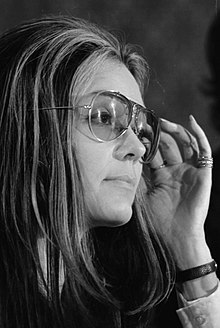
Gloria Steinem

An early woman's rights advocate who captured my heart was Victoria Claflin Woodhull. She had such a complex life that the more I learned of her the more I saw her as a protagonist in a movie rather than a play. I've decided I'll post on the blog about her a few times and see if she still ignites imaginations. She was far ahead of her time, and her dilemmas and solutions still boggle the mind.

Victoria Woodhull, candidate for president, 1871


I said above that the harsh--to us--conditions of today challenge us to predict what life will hold in the upcoming year. I cannot know what to expect but my own self-examination might inspire you to think things through in your own life and commit to one project at a time to get through the days. Being trapped in four walls after a life of random errands and rabbit trails is a challenge. Let us proceed in hopes that we all get through it, and that our spinning heads come to a tranquil stopping place where we understand what got us here and where we can go.

Saturday, April 18, 2020

The Disappearing of Woody Allen


Woody Allen and Statue, Orveido, Spain

Although he's disappeared from the A list, Woody Allen is still at work. He's written an autobiography (Apropos of Nothing) and he is still making movies. And, lest we forget those movies, I am here to remind you. Some you were indifferent to, some you liked, some you loved--and some you’ve probably totally forgotten. A list of his movies is staggering, in sheer number.

Play It Again, Sam (1972); Sleeper, (1973) Annie Hall (1975), Interiors (1978); Manhattan (1979); Zelig (1983); Broadway Danny Rose (1984); The Purple Rose of Cairo (1985); Hannah and Her Sisters (1986); Radio Days (1987); Crimes and Misdemeanors (1989); Husbands and Wives (1992); Manhattan Murder Mystery (1993); Bullets Over Broadway (1994); Mighty Aphrodite (1995; Deconstructing Harry (1997); The Curse of the Jade Scorpion; 2002: Hollywood Ending; 2003: Anything Else; 2004: Melinda and Melinda; 2005: Match Point; 2006: Scoop; 2007: Cassandra’s Dream; 2008: Vicky Cristina Barcelona; 2009: Whatever Works; 2010: You Will Meet a Tall Dark Stranger; 2011: Midnight in Paris; 2011; To Rome with Love, 2012;: Blue Jasmine; 2013: Magic in the Moonlight; 2014: Irrational Man; 2015: Café Society; 2017, and Wonder Wheel (2017).

Vincent Canby, the eminent film critic of the New York Times, in his review of Bananas in 1971, said “Thirty years ago, some very perceptive critics, including James Agee and Otis Ferguson, used to grow all sad and misty in print because W. C. Fields seldom made a movie that was as funny in its entirety as it was in its individual parts. Today, it doesn't make any difference. That was the sort of movie Fields made, and now we accept the rhythm of his comic genius, since it was an indispensable part of that genius. The same may well be true of Woody Allen who, when he is good, is inspired. However, when he's bad, he's not rotten; rather, he's just not so hot.”

We and the critics were smitten with Allen’s work for 30 years and more. In the New York Times in 1996, Janet Maslin wrote of Everyone Says I Love You, “Allen has often invited his characters to step through time or speak bluntly to the audience, and this film's singing is another such device. It brings an extra element of bravado to a story that is otherwise just funny, lighthearted fluff. Working on familiar territory, Allen dreams up an assortment of neurotic New Yorkers and sets them spinning at a screwball tempo. This suits their rich, carefree circumstances, which deliberately recall the economic dreamland of Depression-era movie luxe. A life this rosy really could prompt the occasional bewitching song.

“Fortunately, while reaching out for the quintessential Hollywood escapism of his boyhood... Allen never forgets the importance of inspired casting and dependably good gags. Despite its musical aspect, Everyone Says I Love You begins very quickly to feel like one more breezy Allen comedy with the occasional tuneful touch. Rather than an aberration, it even plays as an extension of some of his recent work. That Greek chorus in Mighty Aphrodite was dying to sing and dance, too "…But Everyone Says I Love You will be better remembered for its high notes, like the dance beside the Seine with Allen and [Goldie] Hawn, which seems to capture the full wistful, hopeful range of this film maker's idea of romance.”

Roger Ebert, on the same movie: “The plot is simultaneously featherweight and profound, like a lot of Allen's movies: Big questions are raised and then dispatched with a one-liner, only to keep eating away at the hero until an eventually happy ending.”

I choose these movies at random, but there were many more, some of which you’re bound to remember fondly. It isn’t a list of all his movies. I ask you to look it over and reflect, recalling your own favorites. There are many more, and he is still making them although they are no longer distributed in this country due to a scandal of some 30 years ago
.
A vital contributor to world cinema, and still enormously popular in Europe, Allen has been absent on the U.S. movie circuit for several years, and he wrote Apropos of Nothing in order to clear up why. It’s an engaging read, and the details of the debacle that brought him down in the eyes of Hollywood are chilling. The book critics writing in major news outlets apparently don’t want to hear his side and their reviews were scathing. He was vilified for even trying to tell his story—however if you, like me, want to know what happened and what he is doing now, you’ll find the book very much like the man himself. Intelligent, witty, self-deprecating, and full of insight, even to his own detriment. It’s a good book, and it’s important to read it.

About the allegations, he and his wife of over 20 years are firm in stating that he regrets the way they conducted their romance, but after reading his book it’s pretty clear that in no way was he guilty of molesting his adopted 7-year-old daughter. Two investigations were launched at the time and no charges were brought. The investigations suggested the child appeared to have been coached; Allen’s book suggests that it probably goes deeper than that, offering details in a noncommittal way. There have been no accusations of such behavior since then.

Something happened in the zeitgeist however, and the charges came back up. Out of nowhere, actresses and actors who worked with him and once had only praise have issued statements that they regret ever having been associated with him. But nobody has come forth testimony to say he behaved improperly with anybody. 

A.O. Scott, film critic for the New York Times, has written a few times about how much Allen’s films had meant to him, growing up, and how he now rejects the man and presumably the work he has done. He wrote in January of 2018: “The achievement of his early movies, culminating in Annie Hall (his seventh feature as a director) was to turn a scrawny, bookish, self-conscious nebbish into a player. His subsequent achievement was to turn himself into a serious filmmaker without surrendering that initial cachet. The Allen character in his various incarnations might be insecure, childishly silly, socially hapless (or all of the above), but he was never single for long. The aspects of his temperament held up for mockery—the hyper-intellectualism, the snobbery, the irreducible Jewishness—doubled as weapons of seduction. His self-deprecation was a tactic, a feint, a rope-a-dope, and he was plagued less by the frustration of his desires than by their fulfillment. As soon as the heart got what it wanted, it wanted something else.” 

Scott has gone on to say the work does not hold up as we learn about Allen’s personal life. A column published a month later rejects all of Allen's work, saying as a bad man whose work only reflects his personal neuroses he should not be regarded as a valuable artist.   I hope he reads Apropos of Nothing soon enough to change his mind back. It all hangs on his ability to believe Woody is telling the truth, and all the conjecture about his neuroses is our fantasy—or our projection.

Thursday, April 9, 2020

Woody Allen and Me


I've been thinking about Woody Allen a lot since I read his memoir, Apropos of Nothing.

I remembered the first Woody Allen movies I saw--Take the Money and Run, Bananas, and Play It Again, Sam. I had seen him on television and his standup comedy was hip and amusing, and the way he presented himself as a lovable, neurotic loser, while audiences were clearly loving his jokes as well as his intellect was the essence of Woody's paradox. This self-effacing creative force would lead him into success in movies. I had forgotten how many of his movies I had seen until I looked at the list.

Sleeper introduced us to Diane Keaton, who became his foil in many movies to come. She had just the right amount of everyday beauty and Gentile charm to counterbalance the schmendrick  persona he had created for himself. She could match neuroses with him yet still look a little mainstream. She got his jokes and sometimes topped him in benighted klutziness while still looking feminine and sophisticated. They shared an ability to look as if they didn't know what they were doing while they did their mutual shtik extremely smoothly. This was perfected in Annie Hall, which, until I read Apropos of Nothing I thought was just the two of them reliving their own relationship.

Woody had spent his life watching movies, and took to making them with relish. He loved Ingmar Bergman, the Swedish director-producer who influenced so many young filmmakers of the 1960s. Bergman's artistically bare landscapes, his themes of isolation, loneliness and loss of connection resonated with Allen and influenced some of his quietly elegant dramas such as Interiors. But however much he loved them, audiences (and I include myself) were more enchanted with the magic, whimsy, and laughs he evoked in A Midsummer Night's Sex Comedy, Zelig, The Purple Rose of Cairo, Radio Days, Bullets Over Broadway, and Everyone Says I Love You.  Midnight in Paris was a personal favorite.

Okay, this is becoming more a list of lists than an opinion column. I confess that was my purpose all along. I didn't list every movie he was ever involved in, but wanted to jog your memory and get you thinking about all the Woody Allen movies you've seen, and stimulate a discussion of which ones you liked best and why. If you'd care to comment on my omissions, or critique my choices, feel free.  I'd like to know if you agree with me that Woody Allen deserves some good words at this point.

Friday, December 14, 2018

To Kill a Mockingbird Takes Stage


Jeff Daniels, Gregory Peck play Atticus Finch

How does a small, simple novel about growing up in dusty Southern town in the 1930s become an overblown Broadway production full of fire and drama and screaming courtroom slanging matches? First, the writer emphasizes the father rather than the children—who were the focus of the book—tweaks his character by adding great insight and passion, updates the racial relationships in Alabama of the late 1930s—and puts words in the mouths of children that they never said in the novel.

The novel was simple, poignant, and in the hands of its young author, Harper Lee, captured its designated time and place through the introduction of believable, relatable characters—three bright, scruffy children and a kind father who took his work as a small-town lawyer in the segregated South seriously. To Kill a Mockingbird was made into a black-and-white movie in 1962, a movie that held a mirror up to life in the American South depicting the complex racial relations in the adults’ world of the day. To Kill a Mockingbird was embraced for celebrating the best we human beings can be—and wonder of wonders, the South itself was not being vilified for its longstanding racial attitudes. Southerners came to love the book and to feel good about themselves because of it. It had villainous villains—but they were the racists—poor, ignorant folks who lived in squalor next to the city dump—so the reader could see them clearly, reject them, and, through the transcendent hero Atticus Finch, we could identify with goodness and stop hating ourselves.

The film was scripted by Horton Foote, an old hand a screenwriting, and a bona fide son of the region. He captured Harper Lee’s mood; her cadence; her train of thought. It’s a fine little film and in its day it was a bit revolutionary; it changed a lot of hearts in a deep way. The children in the film were touching in their authenticity. They were ordinary, sincere, and captivating. And towering over them all was the figure of Gregory Peck, a movie star from the old school, playing the father with a sonorous voice and a dashingly handsome presence along with an admirable mastery of the craft of screen acting. Peck himself loved the role, and wrote memos to studio executives expressing how he wanted the movie to be more about the character he played, Atticus Finch, than it was about the children. His opinion prevailed, and probably rightly so—however, his interpretation changed Harper Lee’s original Atticus from a simple small-town lawyer to a magnificent example of the best of American jurisprudence. In any later iteration of To Kill a Mockingbird, Gregory Peck would be a tough act to follow.

In this theatrical version, Jeff Daniels brings vigor and personality to his portrayal of Atticus. Totally different from Gregory Peck in both appearance and impact, he embodies all-American integrity and a certain ordinariness that Peck, a matinee idol, bypassed simply by being Gregory Peck, who portrayed the man as a font of wisdom and sympathy.  I suspect Miss Lee’s model for the character, her father Amasa C. Lee, was more like Daniels than Peck (she had originally wanted Spencer Tracy for the role), but that’s neither here nor there since Peck will always be Atticus Finch in the minds of most people familiar with the movie. His performance was so strong that people believe he WAS Atticus Finch. His imprint on the role has a few generations believing they read the book—when in fact they only saw the movie.

As presented at the Schubert Theatre on Broadway, this new To Kill a Mockingbird is overlong and incorporates some reinterpretation that I did not feel illuminated the story. It opens on a backdrop that looks like the side of a barn, and two people come out of a door, a woman positioning herself at an antique organ, downstage left, and a man with a guitar crossing and sitting down right, and they play a few somber notes before the barn wall is removed and actors move to set up a courtroom set. The musicians contribute nothing to the play and I cannot understand what they are doing there.

I do not feel that To Kill a Mockingbird is a sacred text and should not be tampered with. It was a pleasant book, to my mind, but it fell short of being a masterpiece. It was, however, a better movie—in its way is a classic American film, an intimate, authentic story of the South before the upheaval of Civil Rights. As both a novel and as a film, it is a very successful work, and may have potential for reworking, but I have yet to be convinced that a theatrical version can capture what the novel did. 

Playwright Aaron Sorkin has deconstructed the sequence of events, using flashbacks and beginning with the courtroom scene, requiring narration to help an audience orient to the time changes. Sorkin’s script shifts the focus somewhat, and adds some implausible elements like Atticus’ so-called “brotherly” relationship with the black woman who cleans his house and tends his children. This is not in the book nor in the movie, and does not strike me as true to life. Sorkin has also found it somehow necessary to expand the length of the play from a manageable two hours to almost three, which is difficult for most theatregoers to accept.

It would have been nearly impossible to put these leading roles in the hands of a six-year-old girl and a couple of nine-year-old boys, so in this production the roles were cast with actors in their 30s. The children narrate the story. The device is uncomfortable, as the narration reads a bit preachy. Jem, a grownup, is far more overt in criticizing his father than any child would be. Suspending disbelief is more difficult—no matter how good the actors are—when adults are cast as children.

I did like Jeff Daniels as Atticus, and, once I got into the swing of the idea of the casting of the children, I also liked Celia Keenan-Bolger as Scout. Keenan-Bolger has the gifts of a young Julie Harris, and it’s not easy to knock that, although I didn’t think it was quite right for the precociously independent, tough little girl called Scout.  Will Pullen worked well as Jem, looking like a teenager (actually in his 30s) and handling the arrogance and wrong-headedness of adolescent boys pretty well. Gideon Glick, however, was totally miscast as Dill. Seeing such a big and brawny guy play the slightly built and jittery neighbor boy was jarring at best. Not that Glick doesn’t know how to get a laugh, but his appearance here and stage presence gave the impression he had just walked in from the stage of a nearby Broadway musical by mistake. The character he was playing was based on the child Truman Capote, who was a close friend to Harper Lee and just incidentally with her brother. This play put the boys together as pals and Scout doing what little girls supposedly do—tagging along—but this was not the character Harper Lee wrote. Scout was the center of her own life, and the center of the book--and she was pretty fierce when called on to be.

Frederick Weller was too confident, too confrontational, for the ignorant Bob Ewell character. His outbursts in the courtroom were alarming (and of course would not have been allowed in a real courtroom), and his articulation of racist attitudes of the day were more eloquent than such a man would have been capable of. Erin Wilhelmi as Mayella is a brilliant actress, playing a low-mentality poverty-stricken victim of abuse, but the idea of her confronting Finch as she does in this production simply doesn’t seem believable. 

It’s expecting too much to think someone not from Southern culture could capture such nuances as one child saying to others, “Your father was…” when a Southern kid always says “Your daddy was.” It may sound a bit quaint or forced to contemporary urban ears, however, I grew up in Alabama in the 1940s and this was certainly the case. Moreover, the accents in this production were uneven and for the most part a bit off. Jeff Daniels did well, but the only cast member who had me fooled into thinking he must BE Southern was Dakin Matthews, whose performance as Judge Taylor was convincing in every way.

I squirmed through the play, wanting so much to like it, but I couldn’t sit through all two hours and fifty minutes. There was an intermission at the two-hour mark and I debated with myself, but decided I had seen all I could bear to. I knew some good stuff was coming—the scene with Atticus telling Scout it’s a sin to kill a mockingbird (and I’m sure Daniels was marvelous in that), Atticus’ final speech in the courtroom; and the line, “Stand up, Miss Jean Louise, your father is passing…” and the children realizing that Arthur Radley, the dark unknown man living in the haunted house, is their friend; and Scout saying, “Hey Boo” when she sees Arthur hiding behind the door inside her house. I know these scenes and I know they’re beautiful. They are just as beautiful in the book as in the movie, and to justify walking out without having seen their place in the play, I had to tell myself that this production could not have made them more so. I’m told that Sorkin worked hard to make Atticus more relatable, more contemporary, which I would think would be more theatrical, surely; however, the Atticus in the book was a country lawyer and not a crusader on any level. The need to heighten events and enlarge characters for the stage does not particularly serve the material.

There is another dramatization of To Kill a Mockingbird, credited to a writer called Christopher Sergel, who, as far as I can tell, did little more than transcribe the text from Horton Foote’s screenplay. It is often given amateur productions, and it is a bit flat as a play. However, because of its simplicity, it is more likely than this one to be produced in Little Theatres indefinitely. My question is, why make a play out of this book at all? There is an answer.

The answer is, because a new, Broadway-level production offers an opportunity for great American actors to play this juicy role. To my mind this is not enough of a reason. Future productions, if there are any, will always pit the leading actor against Gregory Peck, and future actors most likely will fall short. But I expect the line of actors wanting to take over when Jeff Daniels leaves is already forming.

Thursday, May 24, 2018

A Film Worthy of the Bard


Nothing Is Truer Than Truth is a documentary film, telling in a very convincing way its own truth—that the writer of the works of Shakespeare was not the man we thought at all but Edward De Vere, who lived in the Elizabethan era, traveled to Italy
Edward De Vere
for a year and a half, and returned to bring the Renaissance to England almost single-handedly.

The film, brilliantly written, produced and directed by Cheryl Eagan-Donovan, relies heavily on  the book Shakespeare by Another Name, a biography of De Vere by Mark Anderson. It focuses on the years of De Vere’s life when he lived in Italy, drawing parallels between the works attributed to the man from Stratford and the real life studies and adventures of the English nobleman. Recent thought has brought much attention to the lack of evidence that the man Will Shaksper (sic) of Stratford had the scope of knowledge it would have taken to write what is considered to be the greatest literature in the English language. Eagan-Donovan says little about the man from Stratford, whose life has confounded scholars for centuries, and wisely reveals instead the very colorful and well-documented travels of Edward De Vere.

With footage of the architecture and festivals of Venice, Nothing Is Truer Than the Truth is a visual feast, calling to mind how Italy must have been in the 16th century. There are film clips from Shakespearean productions featuring crucial scenes from A Merchant of Venice, Two Gentlemen of Verona, Romeo and Juliet, Twelfth Night and The Comedy of Errors--all illustrating Shakespeare’s intimate knowledge of Italy in his time. There is commentary by Derek Jacobi and Mark Rylance, both players who are knowledgeable about the details of Shakespeare’s work and his times. Jacobi openly espouses the idea, and here defends his position strongly, that whoever wrote the plays would have to have been to the locales and known some of the characters he wrote about—and that Edward De Vere fits that requirement remarkably.

Scholars, too, appear in the film and discuss their findings about the Shakespeare authorship question. Roger A. Stritmatter, who has done primary research on the Geneva bible owned by Edward De Vere (and annotated in such a way as to confirm its connections to Shakespeare’s writing), Alexander Waugh (grandson of Evelyn), Richard Whalen, (author of Who Wrote Shakespeare?), John Shahan, Diane Paulus, Tina Packer, and many others, talk about Edward De Vere and the works of Shakespeare.

Nothing Is Truer Than Truth is exhaustively researched and a joy to watch, leaving the viewer with a sense that there is more to this story than we yet know.

Sunday, May 13, 2018

My Mother, My Friend

Maudetta Graham was the baby of the family born to Maude Melia Matthews Graham and John Richard Graham, born in 1914. The family lived in the town of Crichton, hard by (and now a part of) Mobile, and she grew up in poverty with a brilliant underachiever of a father and a doting mother. She learned to love from her mother Maude and her devoted aunt Etta, both of whom she was named for. She was to contract the double name into a shortened version which had an old-fashioned, genuine ring to it, much like herself. She worshiped her older brother, Theodore, known as "Doe," an entertainer and professional golfer. Her brother Claiborne, a year older than she and thought of as the smart one of the three children, died of spinal meningitis at the age of 15, a trauma she never really overcame.

She loved little children and dolls. For her 16th birthday, she received her last doll. Two years later she was married.

There was something innocent and childlike about Maudetta Timbes all her life. She was an expert at denial: Every child she loved was "the smartest" and everybody she knew was nice. A gifted and natural writer, she dabbled in poetry and short fiction. When we moved near the bay she began combing the beaches and collecting driftwood which she fashioned into furniture and lamps. She loved her gardens, always claiming that she didn't like the work but she loved the result. She had a wonderful sense of humor and an almost accidental wit. Her three children had a way of gathering and trading wisecracks and jokes in order to keep her laughing. Even at the nursing home, debilitated by a stroke and enormous discomfort, she was able to laugh if we were able to come up with the right thing to say.

She has never handled harsh reality well. When bad things happened she was overwhelmed. After my father died, desperately needing projects to fill her time, she threw herself into researching and creating a long and complex family history. Aided by a local family history club, she learned the techniques of looking into records--long before there was the ease of the Internet. She spent several years compiling what will always be a family treasure, a 200-page volume of stories, charts and anecdotes of as many family members as she could find, on both sides of our family. She peppered her writing with tales about people and events--rather than creating a family tree, as most do when presenting family history. The family research sites like Ancestry were not there, so she did the looking into old census records on her own. She visited major libraries and browsed ancient cemeteries and church records for her information. Her book is charming, insightful, but full of mythology--just as she herself was.

Her three children adored her but she was in many ways more like an older sibling than a mother. When I returned to Alabama, to live near her as she entered her 80s, I was a different person than the girl who had left at 18. We were able to thrash out some of the details of both our lives, together, and I came to know her on a new level. We never quite reached the natural role reversal of child becoming parent but I helped care for her as she lost a step, then another--and wonder of wonders--she died in 2008--she is still with me every day. She had done the best she could to make her life good, and memories of her make all of us who knew her, better.