Friday, January 22, 2021

A Place in Time

Mary Jane ("Dainty") Graham, My Great-Aunt

I know my friend John Wackman, who died suddenly January 8, is somewhere happily reveling in the message of Amanda Gorman’s inaugural poem, “The Hill We Climb,” especially its inspirational ending,
John Wackman


When day comes we step out of the shade, aflame and unafraid 

The new dawn blooms as we free it 

For there is always light, if only we’re brave enough to see it 

If only we’re brave enough to be it 

John was inspirational to all he met, and those of us who cherished him are now emboldened to embrace what he did inspire, to continue with joy the work we know we must do and be brave enough to commit to our best selves. 

I knew him well enough to know what he wanted from me and what he appreciated about me and others. I still feel that mandate from him and will never forget it. When we talked, he encouraged me to express my impulses in writing, and with his encouragement I re-activated this blog, posting about the our mutual interest in movies of a certain kind. A pet project of mine was to start a blog of movie reviews by women. It was clear to both of us that women see totally different things in movies from those which male reviewers praise. He put me in touch with a site that would help promote such a blog, and he was confident it was a good idea. 

Trying to round up other female movie critics, I had come to an impasse, so I began posting on my blog—Feminist notions and reviews, as well as the biographies of many of the first-wave Feminist women from the 19th century. You can find the thumbnail sketches among the offbeat posts about movies on this blog by scrolling down. I had read many books dealing with these women, who were courageous and ahead of their time and wanted to change the lot of their gender for future generations. 

Back to John. Because I recently was given this photograph and have a nagging need to write something about it,  he would want me to create a post about my great-aunt Mary Jane Graham, whom I never even heard of until a few weeks ago. My grandfather, John Richard Graham, born in 1874, was living an intolerable life in poverty on a farm in Martinsville, Illinois, with three brothers, two sisters, a tyrannical, cruel father and a long-suffering mother. He ran away from home in his early 20s and built a life in a section of the country distant from his family of origin and never revealed to them where he was. He found his way to Mobile, Alabama, married my grandmother and never spoke of his harsh childhood or the family he left behind. 

Mary Jane was about 12 when her oldest brother John Richard left home. She and her sister and brothers saw him ride off on a horse he’d stolen from the barn, all of them waving goodbye to him from the fence. They all were thinking he’d come back in a day or so. But he never did, and they never knew what had happened to him. An incorrigible young man, his parents assumed John had met an early end. In time, each of his brothers also ran away from the farm. One of them named a son John, after his brother. 

I’ve since connected with a second cousin from that side of the family through a popular ancestry website. The cousin, Tony, was interested to learn what had happened to this long lost man, and my side of the family was overjoyed to meet John Richard Graham’s family of origin, although he died in 1950 and so had most of his brothers and sisters. My cousin sent me this photograph, among others, of Granddaddy’s baby sister, along with others. But it was Mary Jane who piqued my interest and set my imagination soaring. She was my great-aunt, and I never heard her name. The photo showed a look of self-confidence and directness that made her seem contemporary. What kind of a life did this beautiful young woman have? Was she as special as she looks in this picture? 

I considered how happy it would make me to learn that she was as intelligent as she looked, and that she was among those influenced by the 19th century women I admired. Born in 1881, Mary Jane, known in the family as “Dainty” because of her diminutive size among the brawny brothers, would have been of an age to have taken part in the Suffragist Movement and other projects of the day that mean so much to me. I wanted to create such a reality for her and turn her into a 19th century woman-hero. Just looking at that face and demeanor, so unlike the frozen, grim appearance of many of the photographs of people of her day, sent my mind to imagining a magnificent life for her. The mythology from my family, descendants of her older brother, was that our penchant for the theatrical and the performance arts came from the Graham side. Granddaddy was a card, and a great storyteller, and my mother and one of her brothers had participated in talent shows and Mardi Gras parades (to my friends in Mobile, her brother was one of the “Comic Cowboys”) in their youth—and my sister, brother and I all yearned for careers in the theatre at some point. Dainty’s looks would have made her a natural. You’ll notice she had a good face for the camera. 

Unfortunately Dainty’s reality did not jibe with my fantasy. In her early 20s she left the farm to marry a Kentucky farmer named John Calvin Walden in Versailles, Indiana. The story gets cloudy here. After one day she returned to the farm, telling her mother that she and John Calvin had fought violently and she was not going back to him. What was the fight about? That is lost to history. I can imagine many things, but I’ll leave it to you to fill in what might have transpired. The saddest part is that Mary Jane discovered she was pregnant and she went back to this husband and had the baby—and nine more babies in years to come. 

The story only reminds me that no matter how I might admire the women of the 19th century, I cannot fathom what their lives were like. They were assumed to be inferior to men and more often than not they bought into that thinking. There was no valid birth control, no sex education, and not even very much education of any kind, especially not for women. In most cases, their only way out of poverty was to marry out of it. Mary Jane was not so fortunate. 

She remained with Walden for the rest of her life. Apparently she adjusted pretty well after all, but what was in her heart was not known. She died in 1935 at the age of 59, and the obituary describes her in glowing terms, stating she was “jolly and bright” and that her principle interests were in her home. Tony asked one of her daughters what she was like and one of the things she revealed was, “She swore like a sailor.” That rings true to me—my granddaddy had a salty way with words and I’m sure her other brothers did too. 

I cannot piece together a picture of the real Dainty Graham, but the photo still invites me to think of her in terms of possibilities, and to wrestle with the few facts I have of her reality. I love knowing I had a foremother who looked like that, and to wish for a few moments of time travel so I could meet her and get at least some of my questions answered.


Thursday, January 14, 2021

All You Need Is Love

John Wackman


From our first days on a committee for the local art-movie theater I spotted John as a man I wanted to have as a friend. We were both new to the area; we shared an interest in offbeat movies, and he had a natural warmth and joy about him that made him a magnet to people looking for friends. We spoke more and more after every meeting, and occasionally shared a ride to an upcoming event. I lived in New Paltz and he lived somewhere in an outlying hamlet.


When I bought a house in Kingston, a pleasant if somewhat neglected Victorian, John stopped by to visit. Workmen were renovating the kitchen and the bathroom, but the charm of the house was evident, and John was taken by the whole enterprise. He walked all around the house, inside and out into the street in front, and seemed transported.


“I have been saying for years I’d never buy a house again, but this is wonderful!” Something about my house and its neighborhood struck a real chord with him, so I suggested he do a little house hunting of his own. A few days later I got a call from him on my cell as I was picking up groceries at the supermarket.


“I’ve found a house!” John said. He was excited, but then he usually was excited, so I assumed that he and a realtor had snagged an old Victorian for him to renovate, maybe near my own. Actually the story was different. He had met a couple, nice people in their 80s,  who had recently bought and renovated a 1950s ranch in a pleasant upscale neighborhood in Kingston, and no sooner had they moved in than they realized it was a mistake and they yearned to move back to the town they’d come from. They offered to sell him their house, and he took it as karma, because he was thinking of buying a house. I kept telling him things don’t happen that way, but he ignored me and bought the house after brief negotiations.


John loved that house, and over time I came to see that things happened to him that just didn’t happen to others. He always started with something personal, for example, people he respected and loved turned up and shared some talent, object, or even a house, and if it felt right, he made his move. He was able to sense when serendipity was tapping on his shoulder. At that time he was spearheading a three-year project to solarize our area, so soon enough he had solar panels added to that house and installed other environmentally sound improvements that reduced his payments for energy and put him in the vanguard of the local movement for renewable energy, recycling, and sustaining the environment. He was on committees advocating for all, and worked with arts groups, theaters, libraries, and music groups. He was a young teenager when the Beatles came to America and he was overwhelmed with their music. He collected their records and in college started a rock band, writing some of the songs and attacking his music with youthful gusto, writing sensitive lyrics about better ways of life. He played piano by ear and after he retired, he vowed to learn to read music as soon as he had time.


His real gift was his way with people. He took joy in the accomplishments—and potential for accomplishments—of everybody he met. He focused in on me in our conversations, and I found myself revealing my heart to him more and more, telling him of my life before retirement and sharing long-lost bits of myself. We made dinner for each other from time to time, him making his favorite camp food—lentils—or his mother’s recipe for vegetable soup, and I would show off my cooking skills of years past with shrimps Florentine or some remembered casserole. I discovered Reese’s Peanut Butter Cup ice cream, which sent us both into ecstasy. Once when I told him what I was planning for dinner he said,  “Don’t worry about it. The conversation is food at your house…”


When the pandemic hit, we had coffee on my porch every Friday until it became too cold. After that we moved inside and had masked conversations between sips of coffee. We would talk of many things, laugh a lot, and make plans for projects for the future. There was no agenda, just a sense of cherishing the time we had together—and he never left without telling me how much these weekly meetings meant to him. I hope I told him it was mutual.


He was on a number of civic committees, and was a ringleader in all of them. It would be hard to find anyone with more enthusiasm for doing good. Some of this came from his Methodist background, which meant a great deal to him, but much of it was innate. He was an optimistic, forward-looking person committed to making the world better with all the energy he could muster. Repair Café was his pet project, a do-good endeavor which floated to various venues, mostly church halls, in the county, and it was part of a movement that was growing around the world. He organized a dynamic branch in this area, the Hudson Valley of New York State, and he organized and participated in all of them. He visited The Netherlands, where the Repair Café movement had started. Communities organize get-togethers of people who know how to fix inoperable objects and appliances (or mend torn clothing), and those who have items they don’t want to throw away, even though broken. The repairers work for free and those with broken objects get them mended at no cost. Win-win, which was John’s favorite thing.


We lost John when he died suddenly a week ago. The many communities in which he had a presence gave a small memorial two days later. Over a hundred people showed up and more than half of them told their personal stories. Grown men wept openly as we all tried to cope with our loss. All the stories told of John’s personal effect on the life of the speaker, how he made him or her feel beloved and special—and as I listened I realized I was becoming a bit jealous because I had kinda thought I was the only one. His ability to boost someone’s ego certainly did not stop with me, and now I knew it.


Without him, what will we do? The Repair Café and other projects and committees he inspired will continue and grow, but we—the people who benefited from his kindness and joy—will have to find our best selves on our own now, and remember the light of his that he gave away so freely. We know we are the lucky ones, to have been able to call him a friend, and that it’s up to us to keep our love for him alive and to keep doing what he would want us to.  


Tuesday, December 8, 2020

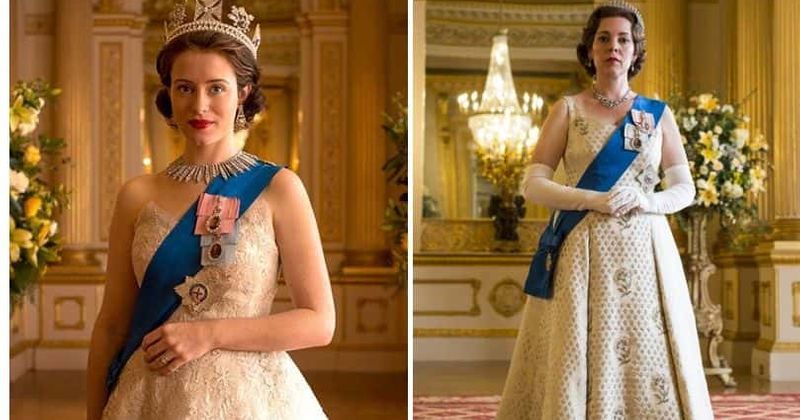
The Women of THE CROWN


Elizabeth II    


Claire Foy, Olivia Colman as Elizabeth II     


With the array of powerful women inhabiting the television series THE CROWN, there is no question which one of them is the center of the universe. However, rather than present a hagiographic documentary of the current queen, Elizabeth II, the series offers insights into history by taking the viewer through scenes relating to world events beginning with Elizabeth's marriage and coronation. Elizabeth wears the crown, and in doing so, she accepts the weight of acknowledging it is her God-given right to do so. Right there, we lower-case democrats puzzle at the concept--which THE CROWN invites us to do. It is clear the writers have an agenda of illuminating the sometimes inscrutable behavior and attitudes of all the royals, and, as the 20th century unfolds before us in the series, forgotten tales and apparently insignificant sidelights take on new meaning.

We learn not only about Elizabeth and her nuclear family, but also of incidents in the lives of the women around her including her sister Margaret (portrayed by Vanessa Kirby and later by Helena Bonham Carter). Princess Anne, the royal daughter, is captured valiantly by Erin Doherty. Season 4, airing now in the U.S. brings us Emma Corrin as Diana Spencer, Gillian Anderson as Margaret Thatcher, and Emerald Fennell as Camilla Parker-Bowles. 

All these characters are known to us but not quite as they are shown here. This Princess Margaret, whom we have seen in newsreels as physically attractive and confident, if a bit rebellious, comes over as self-centered and small-minded, but always a trifle more vulnerable than anyone else, and perhaps consequently more human. To present the many stories, dialogues between two people that illustrate a relationship or further the story line, may be unlikely ever to have happened. Yet something similar surely must have--so we are drawn into the stories, scene by scene.  

At first, we are told it is all about Elizabeth. Her father tells her new husband, "She is your job now," and so it goes as the series proceeds. There are bumps in the marriage but the couple remain committed. Philip is complex and not always transparent or lovable, yet Elizabeth rises above the everyday conflicts and challenges as she must. Whether or not the real Elizabeth is as insightful is a question, but her ability to remain confident and unbending would be daunting to any adversary. She is disarmed by Jacqueline Kennedy, only to be hurt days later learning Mrs. Kennedy spoke rudely of her. She never masters the demands of motherhood, apparently because she has no tools to do so, having been raised in the bubble she was. Her needy son is a mystery to her, and not one she has much interest in solving. At one point she marvels that her husband has the ability weep, as shedding tears has never been possible for her. She is above it all, and that is difficult work for woman or man.

She is not unaware of what is happening around her, and there is a scene late in the series in which she asks her daughter Anne to give her the details about Charles and his unhappy marriage to Princess Diana. Anne lays it out precisely, mainly with the phrase, "Diana is young for her age and Charles is old for his age, and they should not be together." The conflict springs from the fact that Elizabeth was never a good mother, and being asked overtly, as she is in the series by Diana, for maternal solace and affection, she is as offended as she is perplexed.  There is an episode with scenes of genuine warmth and love between Diana and Charles, but the two are in reality so mismatched we know it will not last. We have, of course, the advantage of knowing how it will turn out--pleasant as the love scene is, we know better.

THE CROWN does present, in no small part through its female characters, a question of whether the reality is that royalty creates unconquerable pressures on all who surround it. We see a stoic Margaret Thatcher attempting to foist her fierce world view onto a frozen monarch trying to suppress her own shock. We see a princess sister throwing royal tantrums as a way to wrest power and significance on a par with her sibling, whom the state declared entitled to it years before. We see a prince as a lonely boy growing up confused about his own competence and yearning for the support of either parent. We see Elizabeth lavishing her concern and compassion only on her horses and dogs. 

We can marvel at the pageantry, the tradition--the beauty even--of having monarchs to observe the government of a nation without the ability to participate in it except ceremoniously. But what the institution of the monarchy itself does for anyone is left to ponder. They are just people, after all, who happened to be in a certain place at a certain time.  The only thing special about any of them is that they have been indoctrinated with the view from birth that they are special and demand respect without a clue of how to earn it and without any levers of real power. 

The moment early in the series when Elizabeth makes her vow to her god to defend the crown she will wear is probably the most important revelation we are to get. It is the solemn testimony, given by English monarchs for centuries, that endows this particular one with a kind of divinity that transcends time and feels completely anachronistic in the 21st century.


Saturday, November 7, 2020

Finding Her Own Way

Anya Taylor-Joy as a Chess Prodigy 

Beth Harmon. a child left to navigate her own life when her mother is killed in an auto accident and she is spared, is eight years old, bright but not outgoing, and on her own. Her story, a fiction so bizarre that it rings true, is the basis of the Netflix 7-part series The Queen's Gambit

The series presents her life in flashbacks and straight narrative as Beth grows from confused childhood to extraordinary fame as an expert in the prestigious, challenging, masculine milieu of a highly-rated chess player, with its own rules and boundaries. A Dickensian tale, set in Kentucky in the early 1960s and the larger world, the title refers to a chess move Beth masters early on. 

We see in flashbacks young Beth being coached to learn to live her life by herself, by a mother who even she senses is a little off, an angry recluse who knows her time with her daughter is going to end—and by her own devices. Beth learns to harden herself as she observes the dark world around her. She is in an orphanage, and the grownups in her orbit are not supportive (much less loving). She happens upon the janitor in the basement, where she has been sent to clean erasers, and this man is playing chess by himself, every spare moment he has.

Forced by circumstances to find her own way through life, almost magically Beth persuades him (in an excellent acting turn by Bill Camp, spot-on perfect for the role) to play the game with her. Mr. Shaibel is noncommital to the point of being stern, but it is clear he is well aware that his student is light years better at the game than anybody he has ever played.  

There is something very appealing about this stony child, and we are swept into her life as she makes big mistakes and little ones--meets fascinating people but is not taken in by them--and travels the world of the early 1960s, enlivening the once-esoteric sphere of chess championships and makes us feel a part of them. A very moving section of her story is when, as a young teenager, she is adopted away from the orphan home and into a somewhat typical American home of the day, and ends up bonding with her adoptive mother, a very convincing trapped 1960s housewife, played by Marielle Heller. This mother figure is clearly flawed, but a dear, lost human being as much in need of mentoring as her adopted daughter is. Beth as a child is portrayed by two different actresses, so like Ms. Taylor-Joy I had trouble believing she hadn't played all three.We watch the men who crack the shell of Beth Harmon,  chess masters all, and see her development as a full person by the end of the series. Actress Moses Ingram helped humanize Beth by being a friend to her, and in their individual ways so did Harry Melling, Joseph Fortune-Lloyd, and Thomas Brodie-Sangster. All these characters taught Beth something, even if it was not what they thought they were teaching her. 

But it's really all about Beth Harmon, a young woman who had to find her own guideposts and stumbling blocks, and with the outstanding actress Anya Taylor-Joy at the helm, The Queen's Gambit is a fine ride. Based on a novel by a man, Walter Tevis, and produced by two other men, Scott Frank  and Allan Scott, nevertheless I saw this as a woman's movie, life from the viewpoint of an empowered and brilliant woman, defining life on her own terms, and as that it was totally satisfying.

Saturday, September 12, 2020

Bananas Revisited


Once upon a time Woody Allen was a witty comic with a burning desire to live the life he'd seen in the movies, and also to make movies of the kind he'd seen and grown up with--sophisticated New York movies, with glittering people doing mysteriously sophisticated things and living magical lives made real on the screen. 

He scored a career in show business as a teenager by submitting one-liners to newspaper columnists who inhabited the world he dreamed of, and gradually met and worked with some of the storied names in that business, like Abe Burrows and Danny Simon. He wrote for television comedians and had a turn or two of his own in standup comedy, bringing down the house with the paradox of his own image--a homely little klutz with a brilliant mind and the clear yearning to appear debonair while tripping over the furniture. He could articulate this like no one else of his generation and it wasn't long, in show business years, before he was starring in movies he wrote for this character, this Hugh Hefner wannabe who unfortunately looked more like Arnold Stang. Bananas was one of the first movies he made, and even then, he thought of it as meaningless slapstick. He says in his memoir Apropos of Nothing that he was astonished it was taken as a political satire in Europe--writing that his intention was nothing more than to make people laugh. There are shades of the Marx Brothers, all three personified in Allen himself, and the movie, seen today, even foreshadows some of the serious work he was to produce later. There are leering male-chauvinist jokes (and no doubt Allen is a typical male chauvinist of his day--remember I said Hugh Hefner rather than Cary Grant), visual gags--I can't even explain to today's audiences why his J. Edgar Hoover in Bananas was one of the funniest images ever in the movies--a love story with the actress who was his muse for years (Louise Lasser, who projects an earnestness shining through her waif-like dependency), spoofs of television's obsession with sports, jokes about breasts, jokes about child molesters, and an irreverent attitude about everything. Allen was adroit in his movements, graceful even. He runs, jumps, falls into manholes--and in the trial scene toward the end, cross-examining himself as the witness and prosecutor, leaps back and forth, switching character while doing a brief dual role .

Watching Bananas, I can see why Woody Allen makes some women uneasy. Men of his generation were pretty frank about what they found attractive in the opposite sex, and Woody joked about it openly and sometimes in a vulgar way. A man who looks like that and seems to have a healthy sex drive (and doesn't mind verbalizing it) is automatically suspect, especially today. In Bananas there is a split-second on screen in which he, as the director of the film, spoofs that very concept. The character Allen is playing has managed to find and seduce a girl, and he's way more in love with her than she is with him. She's kicking him to the curb and he's angry about it. In the locker room with his male buddies, who are fairly good-looking guys, Allen fumes to a cohort, "Can you imagine a guy like me being dropped by a woman?" The set-up has both men looking at the camera, and Allen not seeing the look on the handsome face of the man behind him. It's the perfect example of a person looking askance. That Allen wrote the scene and directed it as he did speaks volumes. I'm sure he didn't have to tell the actor how to look at him. I laughed out loud--and, as I said, it was just a few seconds of screen time.

This movie came out at the beginning of his transition from standup comedy to a film career. He dismisses Bananas today as pointless comedy, but it was much cleverer than anything of its kind at the time, and it launched him as a movie actor, a writer, and a director. Looking at it now one cannot help but think of what a brilliant career he has had and regret that, although he is still producing films, they are not distributed in the United States. Now in his eighties, Woody is a pariah in Hollywood, because of what is to me a step too far in the "MeToo" movement. The story of his downfall is juicy, and he does not come off particularly well, but he deals with it all in detail in Apropos of Nothing. He made some mistakes, and no doubt some of them caused some pain--but his child molestation rap was fraudulent, and he has been happily married for some 20 years. The body of his work is equal to anything Hollywood has ever come up with. He continues to work on movies that get a good reception in Europe.

If you don't know Woody Allen's movies, or if like me you saw Bananas in 1971 but have little memory of it, it's a good way to discover the Woody Allen who used to keep us laughing. The list is long, and worth exploring.

Sunday, August 16, 2020

Hepburn Bends Gender: Sylvia Scarlett

 In 1935, elegant young star Katharine Hepburn was hot property. She chose challenging roles and on just about every front she conquered Hollywood. And then she made Sylvia Scarlett, a wacky mess of a movie that confused critics and audiences, but has held up over time and is still as confounding and delightful as it ever was. She and George Cukor, who directed it, said in an interview in the 1970s that it was the worst movie they'd ever done.

I beg to differ. I was in my 30s when I saw it--I had a place in my heart for the films of my parents' generation, and still do--and I was captivated. I recently saw it again and it still works. The concept is dubious; Hepburn and her father, (played by Edmund Gwynn) are broke, unprincipled, and down on their luck to the point of desperation. They decide as they are running from law, that their best bet is to have her, a nubile if naive beauty, disguise herself as a boy. Hepburn comes to life in drag, effervescent as usual, but liberated by having to suppress her feminine charm as much as possible. She look smashing in men's wear, but it takes some conscious suspending of disbelief to accept that she is getting away with it.


That, of course, is part of the fun. Another aspect of it is that the pair meet up with a successful confidence man, played by the young, athletic, energetic and acrobatic Cary Grant, who takes a shine to them and shows them the tricks of the trade. He is a cockney low life in this one, a bit of a charming rotter, and he plays it to the hilt. The chemistry between Hepburn and Grant is palpable and foreshadows their years of work together to come in more traditional material. 

Sylvia become Sylvester, and although Cary Grant's character is suspicious, he goes along with it and the trio pair up with a lady who the old man is almost literally crazy about. Four con artists in a trailer, wreaking havoc wherever they go, and having a marvelous time until Sylvester realizes that he's really a woman and falls in love with a rascally artist (Brian Aherne)  who already has a woman or two or three. The plot gets very twisted as the movie goes on, but it doesn't lose its verve. I would recommend you watch this one--I'd like to see what a contemporary viewer would think, having little or no context for the complexity of the movies of the 1930s, and the inventiveness of young actors on their way to becoming movie stars when the medium itself was free and easy.

Thursday, July 23, 2020

A BOMBSHELL of a Movie

(Inset: Megyn Kelly), Charlize Theron, Nicole Kidman, (Inset: Gretchen Carlson


From a Feminist Viewpoint:


You see them in their saucy 5-inch heels and revealing tight skirts, the female icons of sex and sophistication, striding through the offices of big money-making corporations for industries like publishing, fashion, real estate, financial planning, broadcasting, and other high profile, high powered international businesses. Bombshell is a movie about such women, in the field of television broadcasting. 

It’s not an accident that the setting for the film is the offices of Fox News. I confess to have little knowledge of Fox News and just a faint awareness of the performers who inhabit the newsroom. It is not the kind of television that appeals to me because of its politics, but it is in the peripheral vision of any American with a television set. It is a propaganda outlet, spewing the venom that the Republican party has been generating for decades, and doing it successfully, largely by exploiting the sex appeal of its female stars.  Bombshell lets us get to know those females and observe them in their daily lives, which are pretty extraordinary, like it or not. 

The dazzling Chalize Theron plays the dazzling Megyn Kelly, who topped the Fox News lineup of beautiful, steely women pundits for more than a decade. Kelly herself could have come from Central Casting as a hard-headed, hard-hitting and opinionated bitch-on-wheels type in any movie, and Theron’s transformation is pretty dazzling too. She looks like her, and has mastered the rapid-fire delivery of lines employed by purveyors of broadcast news in the 21st century. The movie opens with a cozy walk around the newsroom with Kelly (Theron) as a sleek, informative guide, and she wins us over from that intro, which captures the newsroom vibe and sets the tone for an exciting ride. In the mix comes Nicole Kidmann as Gretchen Carlson, the former Miss America already hitting her peak at the network and beginning a shaky ride downward. 

Margot Robbie, a playing a pretty little thing, (and fictional character) has just gotten her dream job starting at the network, and reveals that she and her parents adore Fox News and that she is desperate to make it big. She shares a cubicle with Kate McKinnon playing an outlier, keeping as low a profile as she can at the network because she is a lesbian, not a beauty queen--and may actually be a Democrat. She takes a shine to the Robbie character and they have a touching bedroom scene that reveals the heart of the film.

John Lithgow, as Roger Ailes, founder and CEO of Fox, is appropriately repulsive, knowledgeable, (“It’s a visual medium,” he says to neophyte beauties as he undresses them with his eyes in initial interviews, and asks them to stand up and “twirl” for him). Lithgow comes over as unscrupulous as the villain in any piece must be. The formidable Lithgow plays it to the hilt.

It’s fun to watch actors portraying real-life people, as Richard Kind does a credible Rudy Guiliani, Allison Janney give us Susan Estrich, and the newsroom swarms with semi-familiar faces as the story moves forward. Holland Taylor, uncredited for some reason, does a convincing turn as Ailes’ keeper of secrets. There is one sympathetic male character, also fictional (a composite of several real men, we are told) played by the very interesting Rob Delaney. There is a moment or two of poignant revelation, as both he and McKinnon say, at different times in the picture, that if Fox News drops them or is itself brought down, there is nowhere else for them to go. “Nobody will hire us--because we worked for Fox News.” 

Intrigue abounds as we see what’s under the rock once it’s moved. I found myself moved at the point in the story when the women at the network are speaking out about Ailes and his treatment of them. Robbie’s character calls her one friend, Jess (McKinnon) in tears because she’s talking with a lawyer about Ailes’ demands. This is a very convincing and heart-rending scene, superbly acted, yet I found myself thinking, “Why do I sympathize with this character? I don’t like women like this…” and then I realized that it was really what the movie was about.  

Its basic axe to grind is not the reprehensible behavior of Roger Ailes. It is about what happens to beauty queens when they achieve their goals. Practically all the female characters have spent their lives grooming themselves for the ultimate position they desire. Intelligent, pretty, ambitious, they have molded themselves into the kind of women who succeed, yet, at the pinnacle, they are shown the reality that the power they may have desired is going to be doled out in small portions by old white men who have their own prurient interests in mind. That dynamic is never on the screen, but it is clear who is participating, who is looking the other way, and why. 

The film was ably written by Charles Randolph and directed by Jay Roach, both males clearly with a hypersensitivity to the plight of women. It is snappily paced, superbly performed, and slick as a whistle. Its surface is glossy, yet for all its glitz it tells a tale of the ultimate betrayal of women in the workplace.